
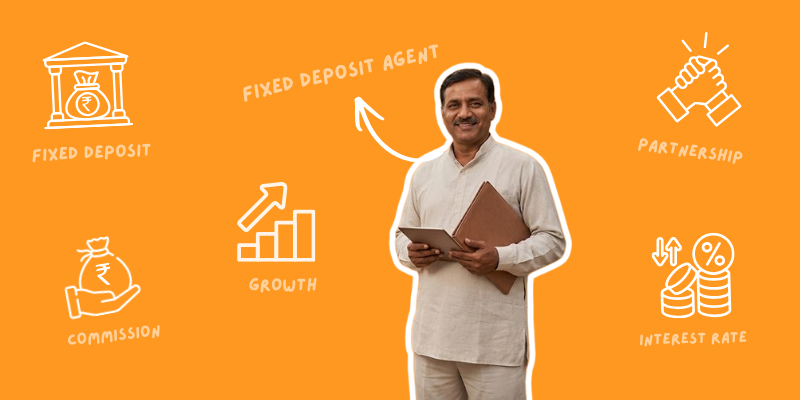


"Fixed Deposit" (FD) is more than just a financial product in the busy markets of Tier 2 and Tier 3 cities across India. It is a sign of trust and safety. Younger people may try out high-risk stocks, but the FD is still the most important part of Indian household savings. The first thing a farmer in Rajasthan, saving for his daughter's wedding, or a retired teacher in Kanpur looking for a monthly pension, always asks is, "What is the latest interest rate?"
As the financial landscape changes in 2026, the gap between what banks offer and what investors need is widening. This has created a massive opportunity for Independent Financial Advisors (IFAs) and agents to step in. People no longer want to wait in long bank queues; they want a local expert who can help investors compare fixed deposit options available across NBFCs and other banks.
Becoming a bridge between secure institutions and these eager savers goes beyond business. Many savers browse FD interest rates online yet remain unsure about selecting the suitable tenure, payout option, or bank. Because of this confusion, they often depend on a trusted FD advisor to guide them. This growing reliance has opened up a clear opportunity for individuals who want to start as financial advisors and build trust-based income within their own communities.
Current Fixed Deposit Interest Rates in India (2026 Overview)
For anyone starting as an FD agent, understanding how interest rates work becomes an important first step. This knowledge helps explain options clearly and builds confidence when investors ask questions about returns and safety. Interest rates are currently stable, and Small Finance Banks and Non-Banking Financial Companies (NBFCs) are leading the way in trying to get retail depositors.
The key for an advisor is to remember that "one size does not fit all." People think that public sector banks are the safest, while NBFCs and small finance banks often offer a "premium" in the form of higher interest rates to make up for their smaller size. As of early 2026, many of the best NBFCs offer rates that are significantly higher than regular savings accounts. For senior citizens, these rates often range between 7.5% and 8.5%.
Fixed deposit interest rates are determined by banks and NBFCs based on RBI guidelines, liquidity needs, and market conditions. Interest rates may differ depending on tenure, senior citizen perks, and the payout method. Advisors merely guide the booking process; deposits are placed directly with the bank or NBFC in the client’s name.
The interest rates mentioned here are for reference only. Actual rates may change from time to time. This is why fixed deposit advisors are more important in 2026, as people often prefer a familiar advisor to explain choices clearly rather than using apps or comparison websites alone.
People who regularly help others understand fixed deposit options often end up becoming the go-to person in their locality for savings-related guidance. Over time, this practical need for assistance has shaped a structured role in the financial services ecosystem.
How to Become a Fixed Deposit Agent
Many people searching how to become a fixed deposit agent are discovering that this role allows them to help investors while building a commission-based advisory practice. As more families look for guidance on safe savings, becoming a fixed deposit agent has emerged as a practical way to start a financial distribution practice with low entry barriers. The role builds naturally on everyday conversations people already have about saving money. FDs are widely understood products, so conversations with customers are easier to start. You do not require a fancy office; all that is needed is a laptop or smartphone and a genuine wish to help people save.
Step 1: Understanding the Prerequisites
The appeal of this position is its openness. You don’t need a CA or MBA background. Most platforms demand:
- A minimum age of 18 years.
- Education up to 10th or 12th standard.
- Basic KYC documents (Aadhaar Card, PAN Card, and a Cancelled Cheque).
Step 2: Partnering with a Distribution Platform
Back in the day, an agent had to run to five different bank branches to get registered. Today, digital-first platforms have changed the game. When you join as a partner, you get access to a "Financial Supermarket."
For instance, Choice Connect provides partners with dedicated Relationship Managers who support onboarding, documentation, and process-related queries. Importantly, the advisor does not hold client money. All investments are made directly in the client’s name with the bank or NBFC, helping maintain transparency and trust. If a beginner struggles with a client’s paperwork or is unclear about a new RBI regulation, these managers are only a phone call away to assist.
Step 3: Learning the Digital Tools
Modern agency work is no longer about carrying heavy physical forms. You can now:
- Check Renewals: Review which client’s FD is coming up for maturity next month so you can alert them and guarantee their reinvestment.
- Use Marketing Materials: Access ready-made WhatsApp banners and brochures in local languages to explain the benefits of "Senior Citizen FDs" or "Tax-Saving FDs."
- Instant Booking: Complete the entire process, from lead generation to payment, in minutes. Submit the application digitally and finalize the booking quickly on behalf of your client.
Why Tier 2 and Tier 3 India Needs FD Agents Now
While everyone talks about "Digital India," the reality in smaller towns is that people still value "Human Advice." A mobile app might show a high interest rate, but an elderly person will still hesitate to click "Pay" until a trusted person tells them it’s safe.
As an agent, you are helping fill that trust gap for consumers. For example, a retired government worker living in a small town may have knowledge that FD interest rates are higher elsewhere, but would still prefer someone local to explain the difference between:
- Cumulative FDs: Where the interest is added back to the principal, perfect for long-term wealth building.
- Non-Cumulative FDs: Where the interest is paid out monthly or quarterly, acting as a "salary" for retirees.
By explaining these simple concepts, you become more than just an agent; you become a financial guide. This is why the role is perfect for homemakers, retired professionals, or local shop owners who already have a strong network of neighbours and friends.
The 2026 RBI Rules: What Every Agent Must Know
The RBI has been very active in 2026 to protect depositors. As an advisor, staying updated on these rules makes you look like a pro in front of your clients.
- Nomination is Mandatory: Always ensure your client names a nominee. The new rules make it much easier for families to claim money in case of an emergency.
- Premature Withdrawal: Explain the "Penalty Clause" clearly. Most FDs allow you to take money out early, but at a slightly lower interest rate.
- TDS Awareness: Advise clients regarding Form 15G or 15H so they may submit it if it applies as per the taxable limit. This one small step avoids extra tax deductions and helps build long-term trust.
Earnings and Payouts: How Do Agents Get Paid?
A common question is: "Is there a fixed salary?" The answer is no, but the earning potential is often better because it is based on your effort. As an FD agent, you earn a commission on every "New Booking" and often on "Renewals" as well. For example:
| Investment Amount | Potential Client Type | Why They Choose FDs? |
|---|---|---|
| ₹50,000 - ₹1 Lakh | Small Savers/Students | To keep money away from daily spending. |
| ₹5 Lakh - ₹10 Lakh | Retirees/Senior Citizens | For a safe, monthly income. |
| ₹15 Lakh+ | Business Owners | To park surplus business cash safely. |
By serving a mix of these clients, an active partner in a small town can build a steady income stream over time, depending on activity. Because FDs are "low-maintenance," you spend less time servicing old clients and more time meeting new ones.
Is Becoming a Fixed Deposit Agent Legal in India?
Yes. Fixed deposit distribution is permitted when conducted through authorised banks, NBFCs, or registered distribution partners. Advisors operate as independent partners and follow RBI-mandated processes for documentation and transparency.
Conclusion
The journey of becoming a finance professional begins with the first step. You do not need to leave your present job or lifestyle. You may begin with your own family and friends and help them understand available fixed deposit options and tenures on their savings bank deposits compared to the rates they are currently receiving at the local branch of their bank or financial institutions of their choice in India.
Choice Connect platform provides onboarding, verification, and training support to people who want to work as independent financial partners. With tools like lead tracking and digital payouts, operational processes are simplified, leaving you free to focus on what you do best: talking to people and helping them save.
Fixed deposit products are offered by respective banks and NBFCs. Advisors facilitate the application process and do not hold client funds.
Disclaimer: Choice Connect is a platform for individuals to join as independent financial partners/advisors. They do not offer data entry, content writing, or simple "click-and-earn" jobs. This is a role as a financial advisor where people can join part-time and eventually grow it into a long-term professional career.

